A working-through of grave marker rules, materials, prices and lettering, written after ordering one for a family plot and finding no plain account of how the process runs. Nothing here is for sale.
A monument quote often arrives as a single figure with a granite color beside it and nothing else. That number is not one price; it is seven or eight separate charges added together, and they behave differently. Some are set by the dealer and move with the size of the stone, the hardness of the quarry material and the shop's own labor rate. Others are fixed by the cemetery, published in a rule sheet, and identical for every dealer working in that section. Asking for the quote as line items costs nothing and changes what you can negotiate.
The stone, and why die and base are quoted separately
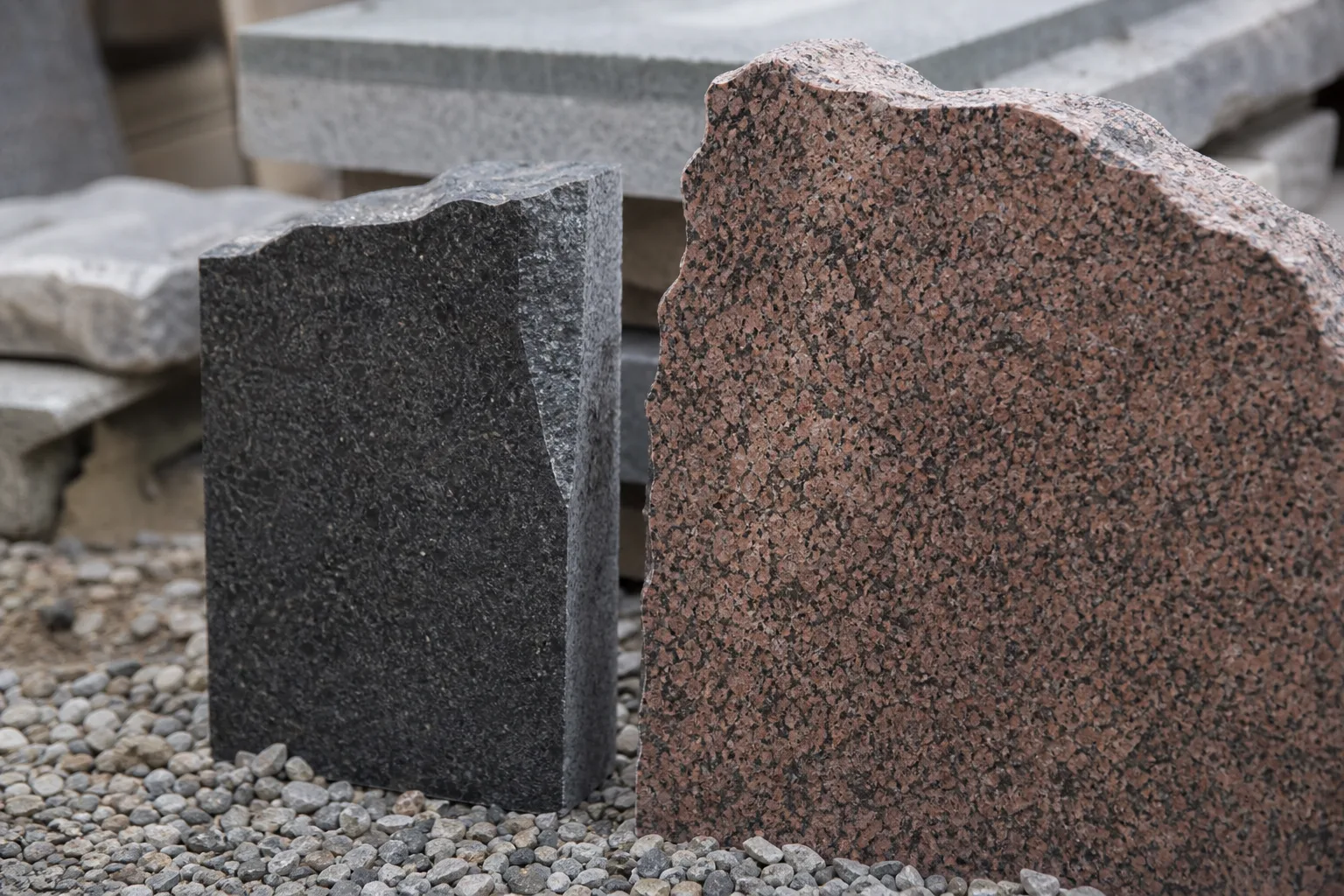
An upright monument is two pieces of granite: the die, which is the standing portion carrying the names, and the base it sits on. Dealers price both by size, usually by the finished dimensions in inches, because the raw block and the polishing time both scale with volume. A wider base costs more granite and more freight, and freight on granite is real money. Color matters as much as size, since common gray domestic material and imported black or red granite come from different quarries at different costs. Ask for die and base priced as two lines, with dimensions written out.
Lettering is a per-character charge, and it adds up quietly
Cut lettering is usually billed per character, sandblasted through a rubber stencil, with the setup for the stencil sometimes billed separately from the cutting itself. That means a full name, two four-digit dates, a surname across the die, and a six-word inscription are all priced by counting, not by feel. Spaces, punctuation and the dash between dates may or may not count, and dealers differ. Larger letters, raised or frosted panels, and hand-carved emblems price differently again. A careful reader asks for the per-character rate, then multiplies it against the actual layout before approving the drawing.
Foundation and setting, which the cemetery usually controls
Under the base sits a poured concrete foundation, and this is the charge most often misread as part of the stone. Many cemeteries pour their own foundations, will not let an outside crew do it, and publish a rate based on the footprint of the base, sometimes with a minimum depth tied to the frost line. Setting, the crew and equipment that lift the stone onto the cured foundation, may be the dealer's charge or the cemetery's, depending on who is allowed through the gate. Find out which entity performs each task, because that determines who owes you a fix if the stone settles.
Permit, inspection and tax, the lines nobody quotes without being asked
Most cemeteries charge a permit or inspection fee before a marker goes in, covering the review of the drawing against section rules, the staking of the location and the sign-off after setting. It is a fixed number in the cemetery's price list, the same for every dealer, and it is not negotiable. Sales tax is separate again, and its treatment varies by state: the stone is tangible goods and generally taxable, while foundation work performed on real property is sometimes treated as a service and sometimes not. The Federal Trade Commission oversees disclosure practices in funeral goods sales, and asking for an itemized written price is an ordinary request, not a difficult one.
What to check before you sign and before you pay the balance
Read the drawing, not the invoice, for anything involving letters. Confirm the spelling, the dates, the layout and the size of the surname on the proof, initial it, and keep a copy, because the proof is the document the shop cuts from. On the money side, check that the deposit is stated as a percentage, that the balance is due on setting rather than on order, and that the quote names a delivery window in weeks. Ask whether the cemetery bills you directly for foundation and permit or whether the dealer passes those through at cost.
The useful division is simple once the quote is broken apart: granite, lettering and shop labor are competitive between dealers, while foundation rates, permit fees and setting rules are the cemetery's and will be the same wherever you buy. Price the first group hard, budget the second group as a known fixed sum, and get both in writing on one page.